
Professional API20E/20F Solutions
Product Overview
As a professional manufacturer of high-strength fasteners in China, JF strictly produces bolts for the oil and gas industry according to API 20E/20F standards.
• Specifically designed for oil and gas drilling equipment, subsea pipelines, and refining facilities, passing sulfide stress cracking (SSC) tests and full-size tensile tests.
• Materials include AISI 4140/4340 alloy steel and duplex stainless steel, meeting standards such as API 6A/17D.
• Surface treatment uses a phosphate + silver zinc composite coating to ensure long-lasting corrosion resistance in deep-sea high-pressure environments.
• Comes with API Q1 system certification packages and 3.1/3.2 material certificates to support rapid delivery for global oil and gas projects.
主要产品类型
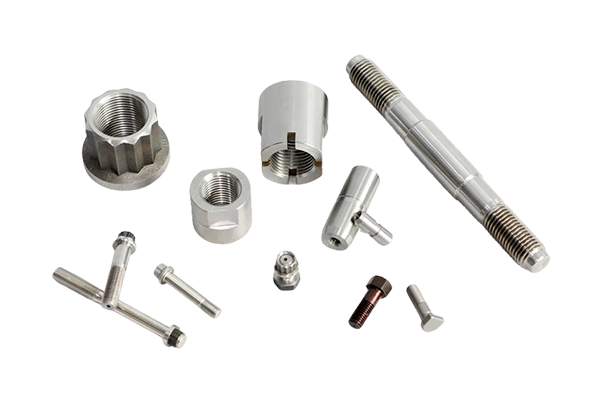
We professionally supply a full range of fasteners that meet stringent API standards, including:
High-Strength API Fasteners: Designed to meet specific mechanical property requirements such as tensile strength and yield strength, used in critical load-bearing applications.
General Oil & Gas API Fasteners: Standardized fasteners covering a wide range of industry applications.
Specialized Drilling API Fasteners: Engineered for harsh drilling environments, resistant to extreme pressure, temperature, and corrosion.
Pipeline API Fasteners: Built for long-distance pipelines, emphasizing pressure resistance, corrosion resistance, and environmental durability.
API Threaded Fasteners: Including bolts, studs, nuts, and more, forming the foundation of all secure API connections.
High-Performance fasteners for the oil & gas industry
In the demanding environment of the oil and gas industry, reliability and durability are mandatory. As a trusted oil and gas fasteners supplier, JF is specialized in producing high-quality fastenings to meet the specific challenges of this sector. Our oil and gas fasteners are manufactured to withstand extreme pressures, high temperatures, and corrosive environments, ensuring the safety and integrity of critical infrastructure.
Tailored solutions and superior materials for the oil & gas sector
Recognizing the unique demands of the oil & gas industry, JF produces fasteners crafted from materials designed to withstand the most extreme conditions. Our oil and gas fastenings are made from high-grade materials such as super duplex and high-performance alloys. These materials are specifically selected for their exceptional resistance to corrosion, high temperatures, and mechanical stress, making them ideal for use in harsh offshore and onshore environments.
High-Performance Materials and Manufacturing for Oil & Gas
In the oil and gas industry, the choice of fasteners is essential for maintaining safety and operational efficiency. From securing pipelines and flanges to supporting heavy machinery, oil and gas fasteners must be robust enough to withstand extreme conditions. Stud bolts made from high-performance materials such as Inconel 625 or Super Duplex alloys are commonly used in flange connections due to their exceptional strength and resistance to corrosion. Fasteners like A193 B7 and A194 7M heavy hex nuts are specifically manufactured for high-pressure environments, ensuring secure connections in pipelines, pressure vessels and refineries. Locking fasteners such as lock nuts and washers further enhance the reliability of connections, preventing loosening due to vibrations or thermal cycling.
Fasteners used in the oil and gas industry are crafted from materials specifically chosen for their resistance to extreme temperatures, corrosive environments, and mechanical stress. JF produces oil and gas fastenings from advanced alloys, including Inconel 718, Monel and Duplex Stainless Steel, all known for their exceptional durability and performance. These materials ensure that oil and gas fasteners can withstand the harsh offshore and onshore environments typical of extraction, refining and transport operations. JF’s state-of-the-art manufacturing processes, including hot forging and precision machining, guarantee that each fastener is made to exacting standards, ensuring longevity and reliability in even the most demanding applications.